Parco dei Capitani / Build
An empty grass area became a rehearsal village: roads, temporary structures, commodities, toilets, utilities and services. Work moved through rain, cold, ice and mud until cast rehearsals could begin in December.
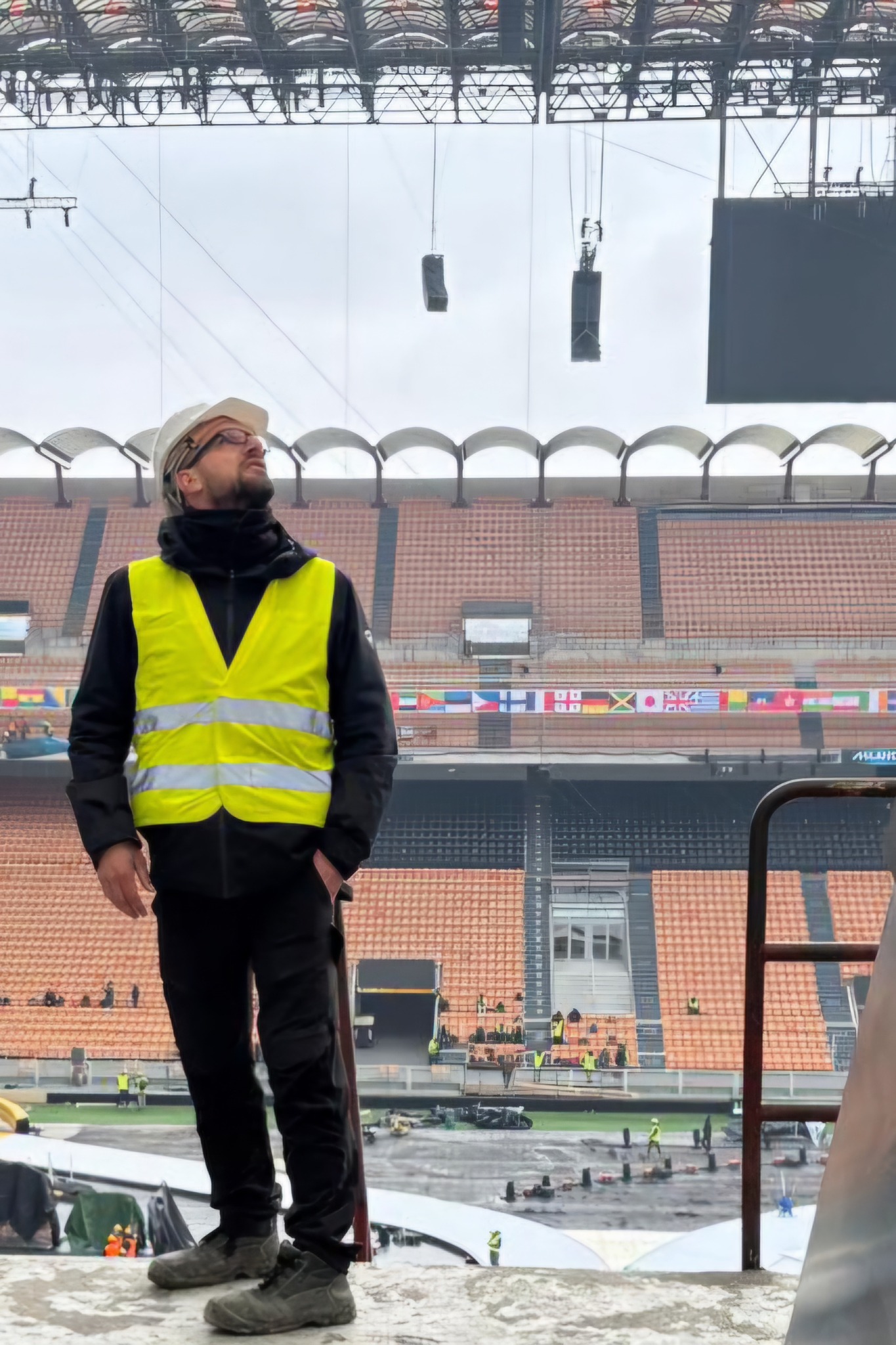
Deputy Site Manager for GL events Live on the Olympic Opening Ceremony venue: an active football stadium, a temporary rehearsal village, a compressed possession window and a reverse operation that had to give the stadium — and the park — back.
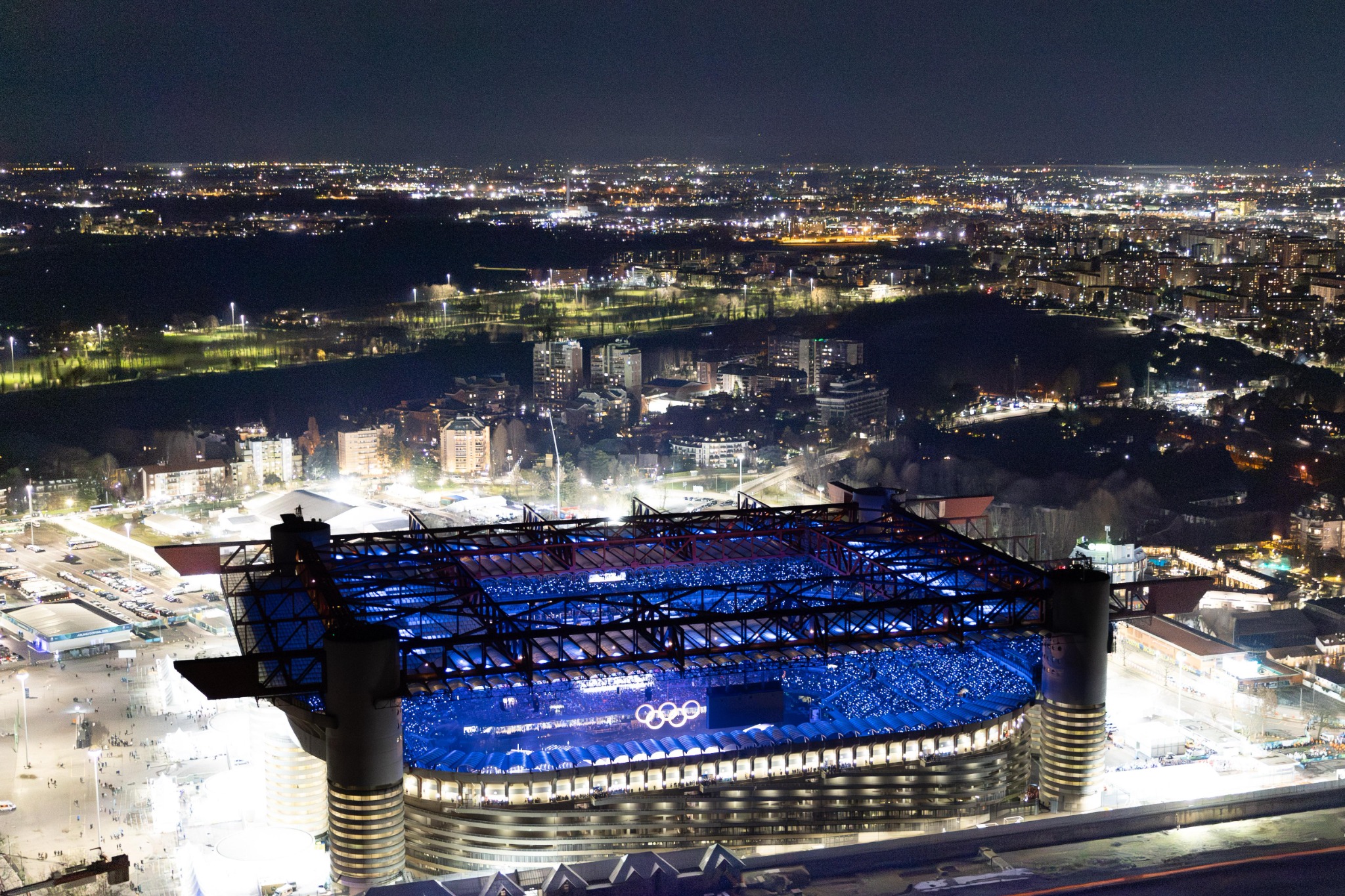
San Siro could not simply be handed over months in advance. It remained a living football stadium. Olympic work therefore developed through phased access, soft fit-out and parallel preparation until the final match released the building into a very short period of exclusive possession.
The venue operation had to connect construction, temporary infrastructure, contractors, security, logistics, ceremonies, broadcast, hospitality and stadium interfaces — while respecting the reality that the building had another life before and immediately after the Games.
An empty grass area became a rehearsal village: roads, temporary structures, commodities, toilets, utilities and services. Work moved through rain, cold, ice and mud until cast rehearsals could begin in December.
Soft fit-out ran while football continued. Exclusive possession began after the late-January match and the operation shifted to 24/7. Trucks, contractors, rehearsals, BOH/FOH/FOP changes and venue readiness compressed into days.
The Opening Ceremony took place on 6 February. Reverse operations started immediately: dismantling, restoration and the race to return the stadium to football use in ex-ante condition.
The rehearsal village disappeared. Temporary infrastructure was removed; the park was levelled, reseeded and handed back on 31 March as scheduled.
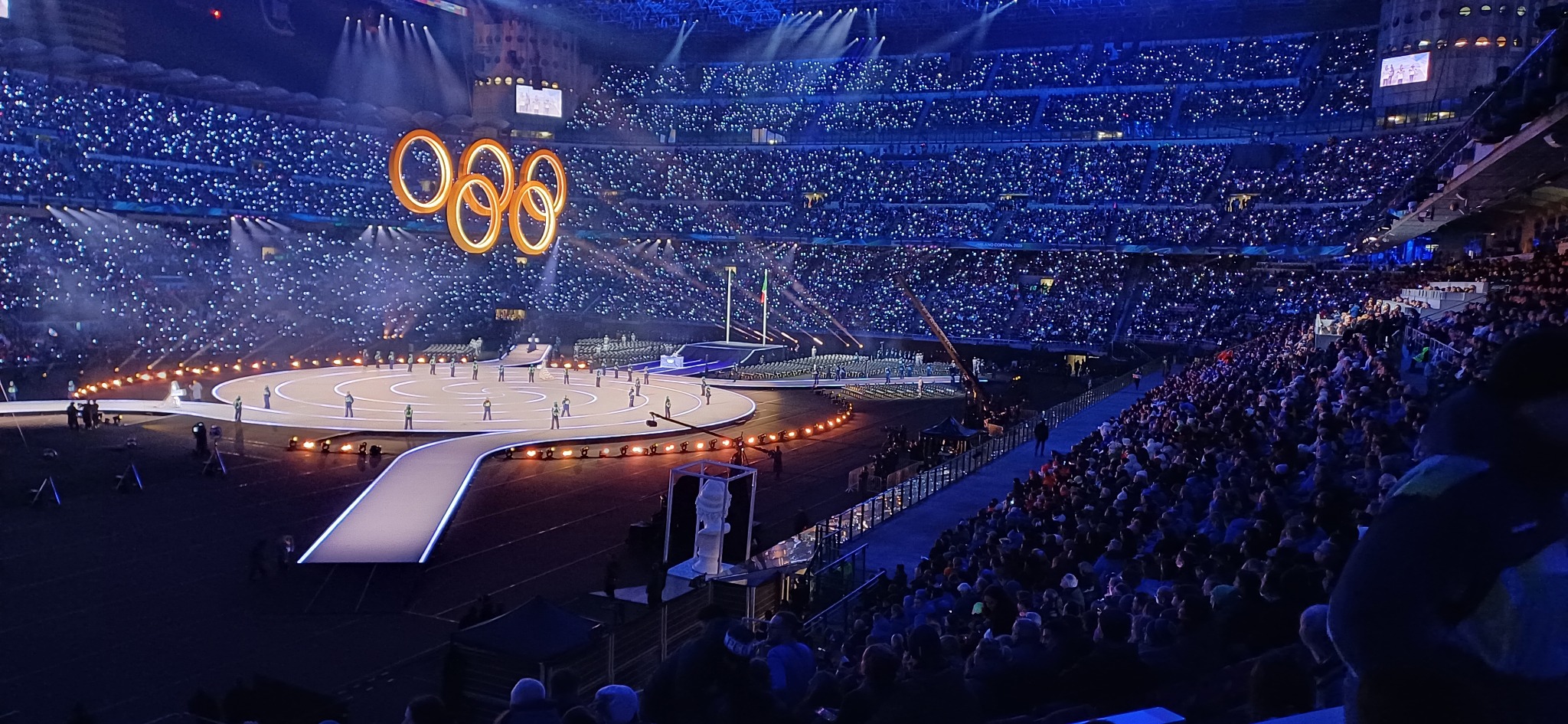
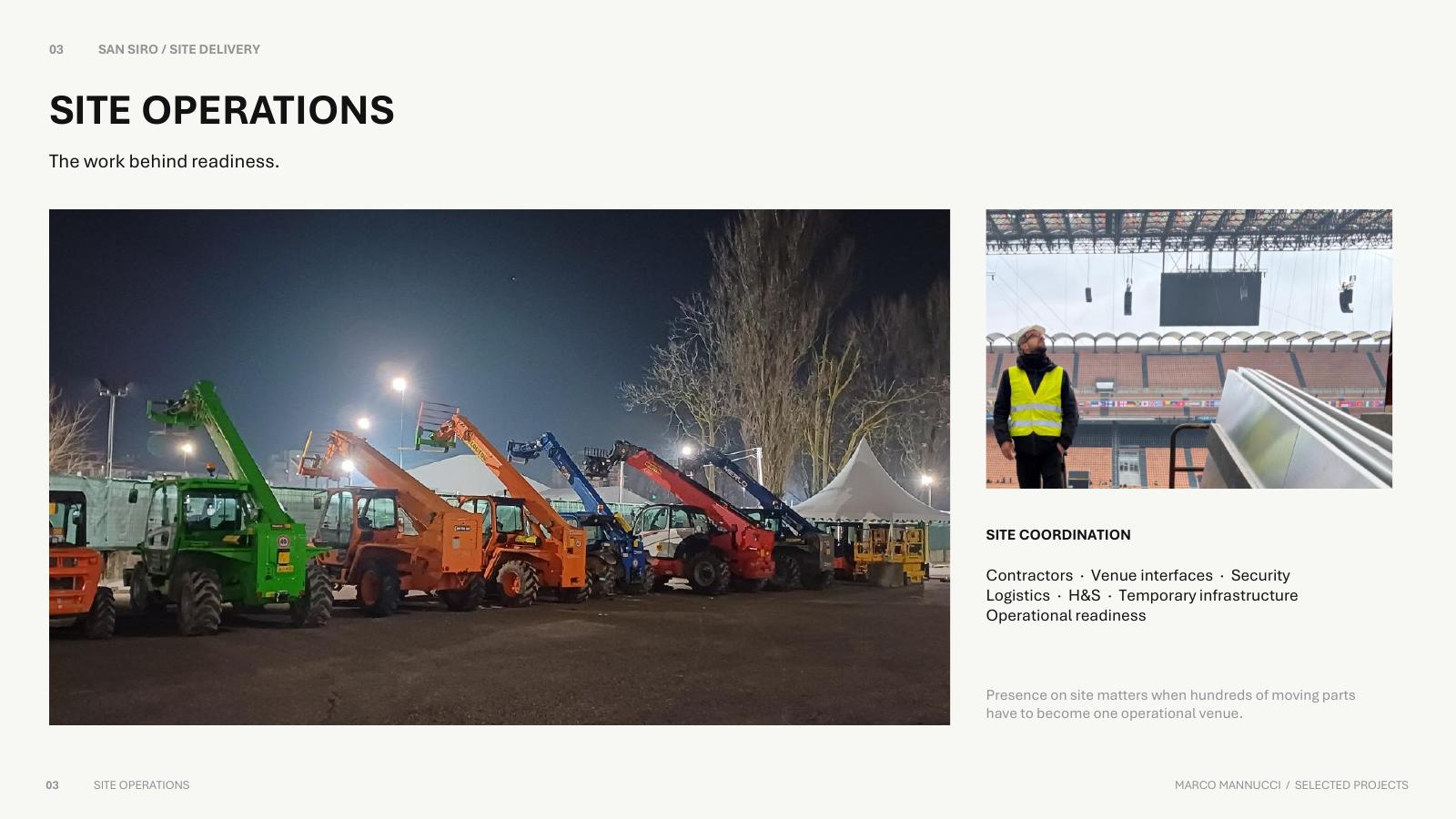
The visible moment was the ceremony. The operational project was larger: make space available at the right time, transform it safely, support the live event, then remove the event without leaving the venue trapped inside it.